01
Mud tubes
Thin, pencil-width tunnels of dried soil, usually brown or grey, running up walls, foundations or pipes. Scraping one off fixes nothing: the colony is elsewhere and will rebuild it.
Termites work out of sight. By the time you see damage, they have usually been feeding for a while. Silver House inspects, treats and protects villas, apartments and commercial buildings across Bahrain, from finished homes to new builds before the concrete goes down.
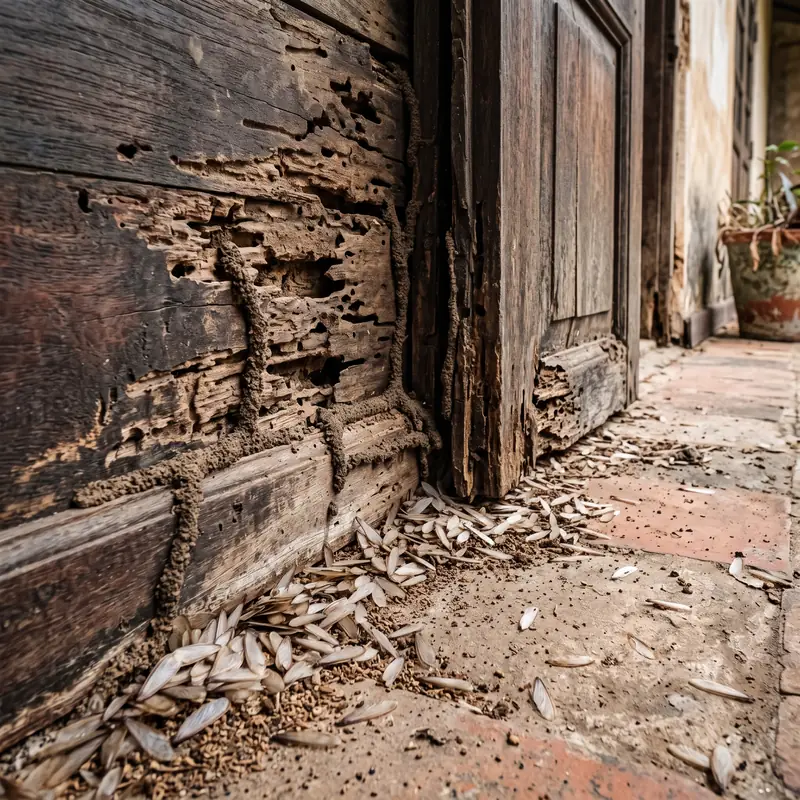
You likely have termites if you see mud tubes, hollow-sounding wood, discarded wings or tiny wood-coloured pellets. Don't wait for proof: an inspection usually costs far less than the repair.
Termites rarely show themselves. These are the clues they leave behind.
Thin, pencil-width tunnels of dried soil, usually brown or grey, running up walls, foundations or pipes. Scraping one off fixes nothing: the colony is elsewhere and will rebuild it.
Tap door frames and skirting boards. A hollow or papery sound means the wood may be eaten from the inside.
Small piles of wings near windows and doors often point to a mature colony nearby. Keep a few for the technician.
Small, wood-coloured droppings collecting below wooden fixtures are another sign of feeding activity.
Paint that bubbles or peels in a line can hide termite tunnels and moisture underneath.
Doors that suddenly stick, and tiles that sound hollow or come loose, can mean termites are tunnelling behind them.
Winged insects swarming indoors often point to a mature colony nearby. Take a photo and send it to us on WhatsApp.
The right method depends on whether the building is finished or still under construction, the floor type, access and how active the termites are.
You can treat termites in a lived-in home. What matters is the method, the access and the follow-up.
The cheapest termite protection you will ever buy is the one done before the foundation is poured.
A certified technician checks walls, frames, floors and the outside of the property for activity and entry points.
We explain what we found, the method we recommend and the products we will use, before any work starts.
Liquid barrier, baiting or both, applied with minimal disruption. Any drilled holes are sealed.
We check the result and recommend a yearly inspection, because no treatment lasts forever.


Post-construction treatments typically last a few years, often three to five depending on the product and warranty, and only if the barrier stays undisturbed. Pre-construction soil barriers often last around five years or more. Digging, landscaping and leaks can break a barrier, so a yearly inspection is recommended.
Yes, with minimal damage. Technicians can drill through grout lines, use baits that need no drilling, and seal any holes afterwards. Ask where holes will go before work starts.
Neither wins every time. Liquid gives a fast barrier; baits are slower but less disruptive and target the colony. Many homes need both. The right choice depends on your floor type, access, termite activity and who lives there.
Yes. Treating the soil before the foundation is poured is the cheapest and easiest time to protect a villa. Skipping it to save money is the classic mistake.
Usually not for standard treatments. If a treatment needs you out for a while, your technician will tell you beforehand. Keep children and pets away from treated areas until they are dry.
It depends on the size of the area, the method and how active the termites are. We give you a clear price after a free, no-obligation inspection.

9 pest and termite problems, answered straight. No jargon, no sales spin. Termite warning signs, protecting a new villa, summer cockroaches, bed bugs, ants, rats and keeping your family safe.
Download the free guideA certified Silver House technician will assess your property and recommend the safest, most effective treatment plan.
We provide termite control in every town in the Kingdom, including Manama, Muharraq, Riffa, Isa Town, Hamad Town, Seef, Juffair, Adliya, Saar, Budaiya, Janabiyah, Hidd, Busaiteen, Amwaj Islands, Sitra, Tubli, A'ali, Zallaq, Awali and Diyar Al Muharraq. Opening hours are Saturday to Thursday, 9:00 am to 6:00 pm, with emergency callouts available. Call +973 3912 3340.